

To start the year, I am writing a series of posts around the “the career of life” series. In these posts, I focus on experiences and skills that help us succeed in our careers, but also and perhaps more importantly, at being human.
The last post on this series is about being resilient.
No matter what we do all of us will certainly have bad things happen to us. In fact, in terms of pure statistics they are just as likely as good ones. As a result, it is in our best interest to learn how to deal with bad times and even learn to embrace them. In short, we all need to be resilient.
On my end, this has been particularly important and relevant ; In the last 6 years I lost both my parents, left a secure job for something more precarious and have been impacted by sickness to count a few. Through it all, I kept (and still keep) on reminding myself that all tough times are temporary and that all loss is a natural part of life.
I believe this is the beginning of resiliency: Understanding that life is a series of events, some are good, some are bad, some are ok and that’s more or less how everything goes. As human beings, we can’t help but assign meaning to these things, but in reality, taken as a whole, a lot of of these events are random and naturally happen to all of us.
A concept that has really helped me deal with said randomness is the Buddhist concept of impermanence. The doctrine states that all existence is “transient, and evanescent” and that virtually all relationships will end via death or separation. As unsettling as that may sound is also true and resiliency begins with the understanding that every, no job, no relationship, no life, will last forever……..Becoming comfortable with this….is in our best interest.
An special quote that I would love to share is this one:
“Things falling apart, is a kind of testing, and also a kind of healing. We think that the point is to pass the test or to overcome the problem, but the truth is that things don’t really get solved. They come together and they fall apart. Then they come together again and fall apart again. The healing come from letting there be room for all of this to happen: room for grief, for relief, for misery, for joy. “Pema Chodrom
So just as we accept happiness, as we accept joy, as we accept relief, accepting grief and misfortune is a way not just to build resiliency but just to fully experience life.
Another buddhist doctrine that has really helped me is the law of detachment. The more one gets attached to a situation, object or person, the harder it is to let go of them. Instead, just focusing on what I can control in this stream of life makes it that much easier to enjoy.
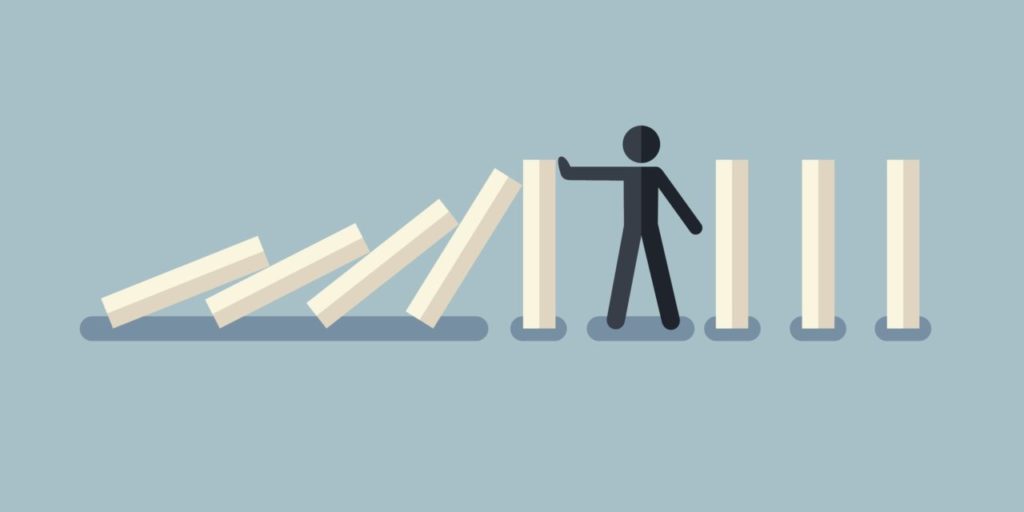
To illustrate this, let me take you to a more mundane example: Imagine that you are a poker player who just lost 90% of his chips. You can’t leave the game and need to focus on your next bet. What do you do next? Focus on the lesson and move on or keep on thinking so much about your loss that you put yourself in the position to lose the rest of your chips.
Focusing on what you can control allows you to redirect attention from other people and random events to your own actions. “Do your best and forget the rest” is a motto that comes naturally after we understand this is the only thing we could do for ourselves.
Building resilience also also can be done BEFORE one goes through hard times.
First, by building gratitude for the things that we do have, when we have them, we will know that at any moment of lost, we have a lot more than we think we have.
Second, building support systems, way before you need them, allows you to build communication and trust, before times of stress hit you.
Finally, having self-care routine when times are good, help you mantain a self of normalcy in bad times. For myself, having a daily meditation and workout routine is a constant that allows me to center myself regardless of what’s going on in life….This is my definition of focusing on what I can control, amidst a life of randomness.
Being resilient is not easy but yet is necessary. We are all going to fall eventually and rather than being afraid of it, we should plan for the eventuality of it.
Liked this blog? Subscribe to my newsletter for similar content and follow me on @alexmontas on Twitter or linkedin.com/in/almontas to keep up with the latest.