
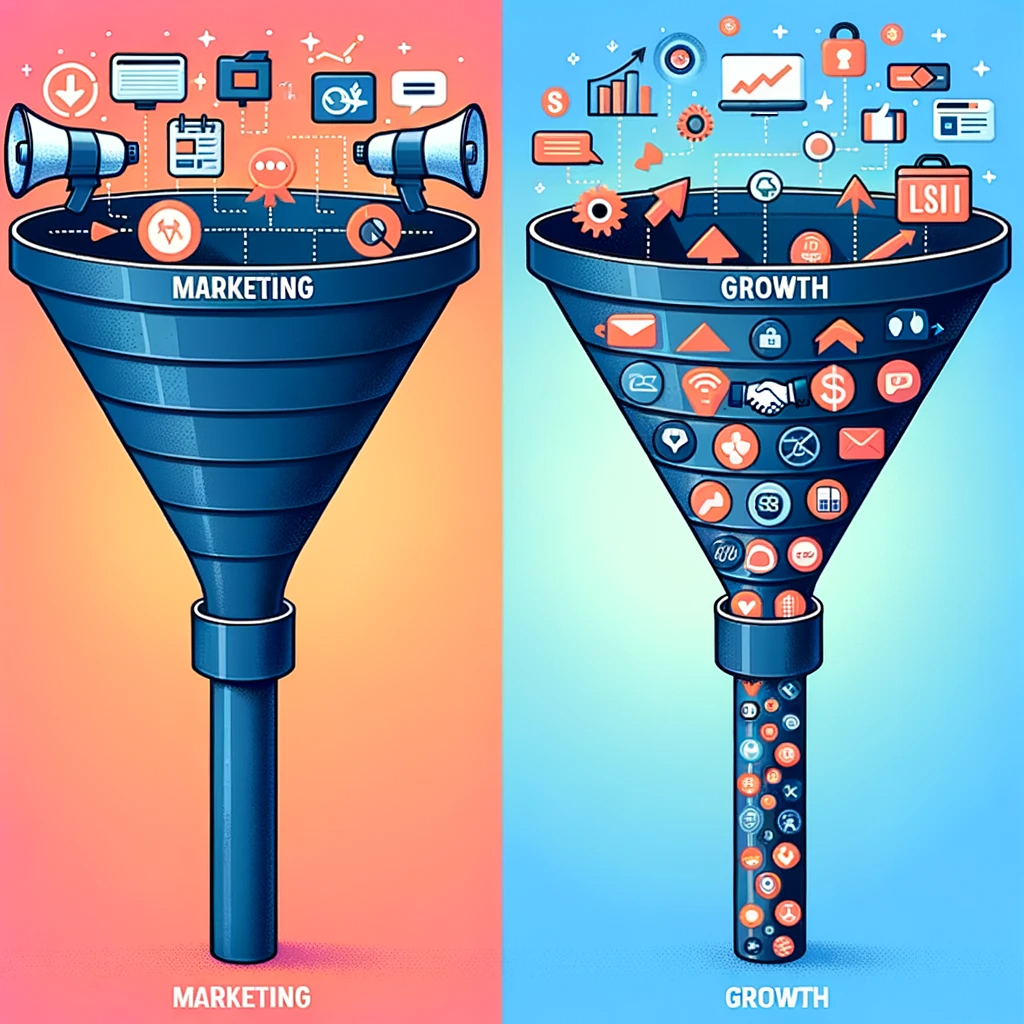
In the world of business, the terms “growth” and “marketing” are often used interchangeably.
But there are some distinct differences between these two critical functions. Understanding how growth and marketing differ can help companies optimize their customer acquisition and revenue strategies.
Based on my experience leading marketing and growth initiatives, here are five key variances to be aware of:
1. Focus
Marketing activities often focus on the top of the funnel and attracting initial interest and awareness. The time frame is short-term. Growth initiatives take a longer-term view, focused on engaging users, converting them to paying customers, and generating repeat business. Growth never stops, versus marketing campaigns that start and end. While growth is inclusive of marketing, marketing is NOT inclusive of growth!
2. Metrics
Marketing metrics include awareness, signups, impressions, reach, sales, and inbound leads. Growth is measured through funnels, conversion rates, lifetime value, retention and other indicators tied to revenue and profitability. While marketing metrics provide a measure of how users are finding your product or service and whether they buy them, growth KPIs often gives us a better idea of the bottom line a bit better.
3. Mindset
Marketing brings in leads and awareness of a product. It often creates sales when done right; growth optimizes the customer journey to convert leads into satisfied, ongoing purchasers. This distinction shows up in everything from messaging to UX design to lifecycle outreach. Marketing educates; growth persuades. Marketing casts a wide net; growth fishes deeper waters.
4. Budget Source
Marketing budgets often come from a centralized pool. Growth initiatives are typically funded by marketing, product and even finance teams based on potential revenue upside. This impacts governance and accountability.
5. Organizational Structure
Marketing roles usually sit within a centralized marketing department. Growth experts are often embedded within marketing or product teams to optimize conversion funnels. This structure frequently creates tension between company-wide branding vs product-specific growth.
In today’s competitive climate, successful companies need both strong marketing for top-of-funnel awareness AND obsession with growth to maximize revenue per customer. Avoid siloed teams. Instead, align marketing and growth, while recognizing their differing priorities.
Marketing and growth pursue related but distinct goals. Marketing usually focuses on building awareness through top-of-funnel activities. Growth maximizes revenue by optimizing the customer journey. Effective marketing and growth metrics differ. And the mindsets are complementary but unique.
Companies that strategically leverage the powers of both marketing and growth will have an edge. Aligning these functions while recognizing their individual value is key.
To discuss how your company can unite marketing and growth for maximum impact, feel free to reach out! As a fractional CMO and former head of growth I am perfectly able to help with both!